
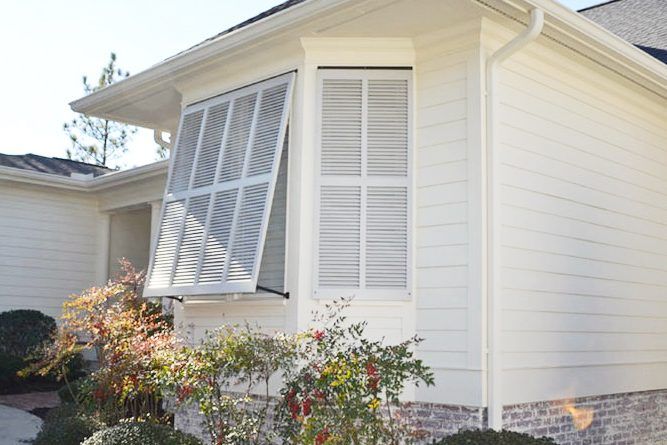
Bahama shutters are a popular choice for homeowners in Hollywood, FL, because they provide shade, privacy, and protection from harsh sunlight. They can also serve as storm protection when they are specifically designed and approved for hurricane use. However, simply lowering a Bahama shutter is not enough to prepare a home for severe weather. Homeowners need to understand how the locking mechanism works, inspect the supporting hardware, and make sure each shutter is properly secured. Regular preparation can help identify problems before hurricane season begins. This guide explains how to close Bahama shutters, check their hardware, and prepare them for storm conditions.
1. Understand How Bahama Shutters Work
Bahama shutters are mounted above windows and open outward at an angle. Unlike traditional storm panels, they remain attached to the exterior of the home and can be adjusted to control sunlight, airflow, and privacy.
Most Bahama shutters use hinges, support arms, and locking hardware. The support arms hold the panel at the desired angle, while the locking components help secure it in the closed position.
For homeowners in Hollywood, FL, these shutters can be useful throughout the year because of the strong sunlight and seasonal storms in South Florida. However, not every Bahama shutter is designed to withstand hurricane-force winds or flying debris.
Before relying on your shutters for storm protection, check the product label, manufacturer documentation, and Florida approval details. Understanding the shutter design also makes it easier to follow the correct closing procedure without damaging the hardware.
2. Follow the Correct Steps to Close Bahama Shutters
Closing Bahama shutters requires careful handling. Larger panels can be heavy, and releasing the support mechanism incorrectly may cause the shutter to move suddenly.
Follow these general steps, provided they match the instructions for your specific shutter model:
- Inspect the shutter: Check the panel, hinges, support arms, and locking hardware for visible damage.
- Locate the release mechanism: Identify the designated pins, adjustment points, or support arm releases.
- Release the support arms: Disengage the mechanism according to the manufacturer instructions while keeping control of the panel.
- Lower the shutter: Slowly guide the panel toward the window frame. Do not allow it to drop or swing freely.
- Engage the locks: Secure the designated latches, pins, or fasteners at their required positions.
- Check the alignment: Make sure the shutter sits correctly and all required locking points are engaged.
The exact process varies by manufacturer and shutter design. Never force a stuck panel or improvise with locking hardware. If the shutter is difficult to reach or operate, arrange professional assistance.
3. Inspect Shutter Hardware Before Hurricane Season
A Bahama shutter can look perfectly fine from the outside while having loose or damaged components. Hardware problems can affect its operation and may prevent proper closure during an approaching storm.
Start by examining the hinges. Look for rust, corrosion, loose screws, and bent metal. Damaged hinges can make shutters difficult to move and may affect how they sit against the window.
Next, inspect the support arms and brackets. These components should be properly attached and free from cracks or visible deformation. Check the locking pins and latches to make sure they engage correctly.
Hollywood is part of South Florida, where coastal humidity and salt exposure can contribute to corrosion. Clean your shutters according to manufacturer recommendations and use approved maintenance products.
If you notice damaged anchors, loose mounting brackets, or bent support arms, have the system inspected by a qualified shutter technician. Replacing a damaged component with an incompatible part may affect the shutter operation and storm protection.
4. Prepare Your Bahama Shutters for Hurricane Season in Hollywood, FL
Hurricane preparation should begin before a storm enters the forecast. Waiting until a warning is issued can leave homeowners with limited time to inspect their shutters or arrange repairs.
Start by checking every shutter around your property. Open and close each unit using its approved operating method. Confirm that the panels move correctly and that the locking mechanisms work as intended.
Remove dirt, leaves, and debris from the frames and surrounding areas. Check for corrosion around exposed hardware and look for loose fasteners. Make sure there are no outdoor objects nearby that could interfere with shutter operation.
You should also review your manufacturer instructions and local storm preparation guidance. Confirm that your shutters have the required approval for the level of protection you need.
If you are planning to install new shutters, ask about Florida Building Code requirements, product approvals, and installation specifications. Proper installation matters because even an approved shutter may not provide its intended protection if it is installed incorrectly.
5. Common Problems That Prevent Bahama Shutters From Closing
Bahama shutters can develop mechanical problems through regular use and exposure to outdoor conditions. Identifying these issues early can prevent delays during hurricane preparation.
Stuck shutters: Corroded hinges, damaged support arms, or accumulated debris can prevent the panel from moving smoothly. Avoid applying excessive force.
Faulty locking mechanisms: A latch or pin that does not engage may indicate worn hardware or alignment problems. Have the locking components inspected before relying on the shutter for storm protection.
Loose mounting brackets: Loose screws or damaged anchors can affect how securely the shutter is attached to the building. These issues require proper repair.
Rust and corrosion: Salt exposure and humidity can damage metal components over time. Regular inspection and suitable maintenance can help identify early signs of deterioration.
Bent shutter panels: A bent panel may not close evenly against the window frame. Forcing it into position can cause additional damage.
If your shutters have any of these problems, professional inspection is recommended. AC Shutters & Awnings can help homeowners explore suitable shutter installation and service options.
Conclusion
Securing Bahama shutters before hurricane season requires more than simply lowering the panels. Homeowners in Hollywood, FL, should understand their shutter mechanisms, inspect the hinges and support arms, and confirm that all locking components work correctly. Regular maintenance can help identify corrosion, loose hardware, and alignment problems before severe weather develops. It is also important to verify that the shutters are approved for hurricane protection rather than assuming every Bahama shutter can withstand strong winds. If your shutters are difficult to close, damaged, or outdated, contact AC Shutters & Awnings to discuss professional shutter inspection, repair, or replacement options.
Frequently Asked Questions
1. How much does it cost to repair Bahama shutters in Hollywood, FL?
The cost depends on the type of damage, replacement hardware, shutter size, and labor required. Minor adjustments may cost less than replacing hinges, support arms, or damaged mounting components. A professional inspection can help establish the repair requirements.
2. When should I close Bahama shutters during hurricane season?
Inspect your shutters before hurricane season begins. Close and secure them when advised by local emergency officials or when storm preparation guidance requires it. Do not wait until strong winds arrive.
3. Can I close Bahama shutters without professional help?
Some shutters are designed for easy manual operation. However, larger panels or shutters installed in hard-to-reach locations may require professional assistance. Always follow the manufacturer instructions.
4. Do Bahama shutters provide full hurricane protection?
Only shutters that meet the required impact and wind-load standards for their intended use should be relied on for hurricane protection. Decorative Bahama shutters may provide shade and privacy without offering approved storm protection.
5. How often should Bahama shutters be inspected?
Inspect them before every hurricane season and after significant storms. Check the hinges, support arms, locking mechanisms, and mounting hardware for corrosion or damage.